The following is a list compiled by Economists for Obama, of Obama supporters:
Economic policy advisors:
Austan Goolsbee (chief advisor), University of Chicago tax policy expert
Karen Kornbluh (policy director)
Jeff Liebman, Harvard welfare expert
David Cutler, Harvard health policy expert
Michael Froman, Citigroup executive
David Romer, Berkeley macroeconomist
Christina Romer, Berkeley economic historian
Richard Thaler, University of Chicago behavioral finance expert
Other economists who support Obama:
Paul Volcker, Chairman of the Federal Reserve 1979-1987
Brad Delong, Berkeley macroeconomist
Joseph Stiglitz, 2001 Nobel laureate
Edmund Phelps, 2006 Nobel laureate
Ray Fair, Yale macroeconomist
Prominent finance people who support Obama:
(not technically economists)
William Donaldson, Securities and Exchange Commission (SEC) Chair 2003-05
Arthur Levitt, SEC chair 1993-2001
David Ruder, SEC chair 1987-1989
The heavy Berkeley influence doesn’t come as any surprise, but what is a Citigroup exec doing on the list? Et tu, Paul Volcker?
Tons of SEC chairmen are big Obama supporters. SEC chairmen who have increased securities regulation from chairman to chairman but never managed to nip an Enron or a housing securitization crisis,before they exploded into national crises.Strikes me a lot as to what an Obama Administration might look like: Lots of regulation and no success at solving any problems.

Friday, June 6, 2008

Wednesday, June 4, 2008
Bernanke Tells Harvard: Things Are Different This Time
Federal Reserve Chairman Ben Bernanke ’75 spoke to Harvard College’s graduating class today in Tercentanary Theatre at Harvard.
Bernanke spoke to the class about the year 1975, the year he graduated from Harvard. He told the class:
Then as now, we were experiencing a serious oil price shock, sharply rising prices for food and other commodities, and subpar economic growth. But I see the differences between the economy of 1975 and the economy of 2008 as more telling than the similarities.
Oh yeah, they are different alright.
Bernanke again:
Economists generally agree that monetary policy performed poorly during this period. In part, this was because policymakers, in choosing what they believed to be the appropriate setting for monetary policy…
Sure, it is real different this time, for the worse. In 1975 money supply (M2) grew at 8.0%, today it is growing at 10.2%.
Bernanke again:
For a central banker, a particularly critical difference between then and now is what has happened to inflation and inflation expectations. The overall inflation rate has averaged about 3-1/2 percent over the past four quarters, significantly higher than we would like but much less than the double-digit rates that inflation reached in the mid-1970s and then again in 1980.
The inflation rate in 1975 was 9.0%. According to John Williams at Shadow Government Statistics, if you calculated the inflation rate now, the same way it was calculated in 1975, the CPI is near 12% this year.
Bernanke then had the chutzpah to add:
The Federal Reserve and other central banks have learned the lessons of the 1970s… as a central banker, I would be remiss if I failed to mention the contribution of monetary policy to the improved productivity performance.
Bernanke spoke to the class about the year 1975, the year he graduated from Harvard. He told the class:
Then as now, we were experiencing a serious oil price shock, sharply rising prices for food and other commodities, and subpar economic growth. But I see the differences between the economy of 1975 and the economy of 2008 as more telling than the similarities.
Oh yeah, they are different alright.
Bernanke again:
Economists generally agree that monetary policy performed poorly during this period. In part, this was because policymakers, in choosing what they believed to be the appropriate setting for monetary policy…
Sure, it is real different this time, for the worse. In 1975 money supply (M2) grew at 8.0%, today it is growing at 10.2%.
Bernanke again:
For a central banker, a particularly critical difference between then and now is what has happened to inflation and inflation expectations. The overall inflation rate has averaged about 3-1/2 percent over the past four quarters, significantly higher than we would like but much less than the double-digit rates that inflation reached in the mid-1970s and then again in 1980.
The inflation rate in 1975 was 9.0%. According to John Williams at Shadow Government Statistics, if you calculated the inflation rate now, the same way it was calculated in 1975, the CPI is near 12% this year.
Bernanke then had the chutzpah to add:
The Federal Reserve and other central banks have learned the lessons of the 1970s… as a central banker, I would be remiss if I failed to mention the contribution of monetary policy to the improved productivity performance.
Friday, May 30, 2008
Sunday, April 13, 2008
Freakonomics Author on Lying Statistics
Steven D. Levitt, co-author of the best selling book, Freakonomics, pulled some doozy statistical magic tricks to reach some of the conclusions in his book.
Turns out, though, he doesn’t trust statistics either, when it comes to his health:
I never trust statistics I get from people in the field of medicine, ever.
We anxiously await Dr. Levitt’s paper explaining why statistics don’t work in medicine, but work in economics, given that there are a lot more variables to contend with in economics, much more difficulty in measuring and observing in economics and, the piece de resistance, there are no constants in economics–--making a lot of economic equations look rather silly. (Levitt’s included).
Turns out, though, he doesn’t trust statistics either, when it comes to his health:
I never trust statistics I get from people in the field of medicine, ever.
We anxiously await Dr. Levitt’s paper explaining why statistics don’t work in medicine, but work in economics, given that there are a lot more variables to contend with in economics, much more difficulty in measuring and observing in economics and, the piece de resistance, there are no constants in economics–--making a lot of economic equations look rather silly. (Levitt’s included).
Wednesday, April 9, 2008
Carlyle Group's Plan to Takeover the Banking Industry
So what’s Treasury Secretary Henry Paulson’s call for changes in regulation of the financial markets all about? A clue may have been revealed today by Randal Quarles, former Under Secretary of the Treasury who led the Treasury Department’s effort in the coordination of the President’s Working Group on Financial Markets and is a current Managing Director at Carlyle Group.
Quarles spoke at a luncheon meeting of the Washington DC-based National Economists Club. His topic: “Restructuring Financial Regulation”. Quarles told the luncheon group that he chose the topic in January. Hmmm. Didn’t Treasury Paulson just make the proposal to restructure the financial regulatory agencies last week? How did Quarles pick this topic back in January? Short-answer, Quarles is a major insider and his comments should be monitored to get a sense for what insiders are thinking.
In his talk, Quarles said that estimates go into the hundreds of billions in terms of capital that will be required by the financial industry because of losses sustained as a result of the current crisis. He said there will be more financial institutions that will go under in coming months.
He said that public markets will not supply the necessary funds because they don’t have the capabilities to study in detail the risks and potential rewards of the complex financials of financial institutions. He said private equity firms have the capabilities to do so and to supply the necessary funds. (N.B. Carlyle Group is a private equity firm).
Quarles stated that some changes in the structure of regulations that Paulson proposed were necessary but would take time to develop. He specifically stated that one regulation that needed to be changed is the limitation on the size of positions that non-banks can take in banks. (Note: Limitations in the size of non-banks positions in banks now limits Carlyle Group from taking large positions in banks).
During the Q & A session, one questioner summarized Quarles talk this way:
So what you said here today is that you would like to see regulatory changes to make it easier for private equity to take major positions in banks? And private equity, through various entities on and offshore gets its money from banks. So what you want is an environment where private equity can borrow from banks to takeover banks?
In response, Quarles laughed.
We might add this private equity acquisition of financial institutions will go on as the general public is scared off from investing in the financial institutions by scare headlines, or as Quarles would put it, “Public markets just don’t have the capabilities to judge the risks and rewards of the various financial institutions.” Translation: The public is not clued in on which firms the insiders have decided to let survive, like JPMorgan, and which they are going to takedown, like Bear Stearns
Quarles spoke at a luncheon meeting of the Washington DC-based National Economists Club. His topic: “Restructuring Financial Regulation”. Quarles told the luncheon group that he chose the topic in January. Hmmm. Didn’t Treasury Paulson just make the proposal to restructure the financial regulatory agencies last week? How did Quarles pick this topic back in January? Short-answer, Quarles is a major insider and his comments should be monitored to get a sense for what insiders are thinking.
In his talk, Quarles said that estimates go into the hundreds of billions in terms of capital that will be required by the financial industry because of losses sustained as a result of the current crisis. He said there will be more financial institutions that will go under in coming months.
He said that public markets will not supply the necessary funds because they don’t have the capabilities to study in detail the risks and potential rewards of the complex financials of financial institutions. He said private equity firms have the capabilities to do so and to supply the necessary funds. (N.B. Carlyle Group is a private equity firm).
Quarles stated that some changes in the structure of regulations that Paulson proposed were necessary but would take time to develop. He specifically stated that one regulation that needed to be changed is the limitation on the size of positions that non-banks can take in banks. (Note: Limitations in the size of non-banks positions in banks now limits Carlyle Group from taking large positions in banks).
During the Q & A session, one questioner summarized Quarles talk this way:
So what you said here today is that you would like to see regulatory changes to make it easier for private equity to take major positions in banks? And private equity, through various entities on and offshore gets its money from banks. So what you want is an environment where private equity can borrow from banks to takeover banks?
In response, Quarles laughed.
We might add this private equity acquisition of financial institutions will go on as the general public is scared off from investing in the financial institutions by scare headlines, or as Quarles would put it, “Public markets just don’t have the capabilities to judge the risks and rewards of the various financial institutions.” Translation: The public is not clued in on which firms the insiders have decided to let survive, like JPMorgan, and which they are going to takedown, like Bear Stearns
The Series Is Back: Notorious Economic Students
Barack Obama's father was a Harvard trained economist. The school's influence was interesting. He came out of Harvard and ended up advocating the communal ownership of land.
He advocated dramatically increasing taxation on "the rich" even up to the 100% level . And in Kenya, he advocated the nationalization of "European" and "Asian" owned enterprises, including hotels, with the control of these operations handed over to the "indigenous" black population.
He advocated dramatically increasing taxation on "the rich" even up to the 100% level . And in Kenya, he advocated the nationalization of "European" and "Asian" owned enterprises, including hotels, with the control of these operations handed over to the "indigenous" black population.
Freakonomics Author On Lying Statistics
Steven D. Levitt, co-author of the best selling book, Freakonomics, pulled some doozy statistical magic tricks to reach some of the conclusions in his book.
Turns out, though, he doesn't trust statistics either, when it comes to his health:
I never trust statistics I get from people in the field of medicine, ever.
We anxiously await Dr. Levitt's paper explaining why statistics don't work in medicine, but work in economics, given that there are a lot more variables to contend with in economics, much more difficulty in measuring and observing in economics and, the piece de resistance, there are no constants in economics--making a lot of economic equations look rather silly. (Levitt's included.)
Turns out, though, he doesn't trust statistics either, when it comes to his health:
I never trust statistics I get from people in the field of medicine, ever.
We anxiously await Dr. Levitt's paper explaining why statistics don't work in medicine, but work in economics, given that there are a lot more variables to contend with in economics, much more difficulty in measuring and observing in economics and, the piece de resistance, there are no constants in economics--making a lot of economic equations look rather silly. (Levitt's included.)
Sunday, April 6, 2008
Mad Money Mankiw?
Isn't Jim Cramer as a source for mad money investment ideas enough? It appears not. Mad money investment ideas are apparently a type of disease that spreads and has reached the campus of Harvard University. Greg Mankiw, professor of economics at Harvard and author of best selling economic texts, is all hot about Carry Trade investing.
Writes Mankiw:
It is rare that I leave an economics conference with information that will change my personal financial decision making. But I was close yesterday. A fascinating discussion of a paper on the carry trade made me wonder whether I should put a little money there.
The carry trade refers to the act of borrowing from countries with low interest rates, lending to countries with high interest rates, and profiting from the interest rate differential. It is based on the hope that exchange rates will not move too much against you to wipe out the profit. In other words, it is gambling that a condition known as uncovered interest parity will not hold. In the past, this strategy has been a money-maker.
Duh! "In the past this strategy has been a money-maker." There is no dumber reason to get into an investment then because it worked in the past. Long Term Capital Management was all about trading based on things that worked in the past. It was a great strategy until things didn't work like in the past and LTCM blew up. The subprime mortgage crisis is all about default rates that didn't work like they did in the past.
Curiously, even the paper that Mankiw sites, suggests the strategy has not been a money-maker in the past:
This paper provides evidence of a strong link between currency carry and currency crash risk: investing in high interest-rate currencies while borrowing in low interest rate currencies delivers negatively skewed returns.
This certainly is downright Crameresque madness on Mankiw's part.
Oh and, by the way, given the weakness in the dollar and our expectation that the weakness will accelerate, betting against the Carry Trade by investing in the Swiss franc and the Japanese yen is the way to go.
UPDATE: Mankiw has now modified a bit the second paragraph that I quoted from his blog. But here's the real kicker, he has added to his post a chart of a "simulation" showing the Carry Trade position to work. He also added to his comment: "The above chart is a simulated past performance from the ETF's website. It is similar to some of the results shown by the discussants at the conference."
Since he still does not address the researchers (Markus K. Brunnermeier,
Stefan Nagel and Lasse H. Pedersen) findings (From the paper he sites!) that Carry Trade positions deliver "negatively skewed returns", he's just very sloppy or damn deceiving with his simulation chart.
Writes Mankiw:
It is rare that I leave an economics conference with information that will change my personal financial decision making. But I was close yesterday. A fascinating discussion of a paper on the carry trade made me wonder whether I should put a little money there.
The carry trade refers to the act of borrowing from countries with low interest rates, lending to countries with high interest rates, and profiting from the interest rate differential. It is based on the hope that exchange rates will not move too much against you to wipe out the profit. In other words, it is gambling that a condition known as uncovered interest parity will not hold. In the past, this strategy has been a money-maker.
Duh! "In the past this strategy has been a money-maker." There is no dumber reason to get into an investment then because it worked in the past. Long Term Capital Management was all about trading based on things that worked in the past. It was a great strategy until things didn't work like in the past and LTCM blew up. The subprime mortgage crisis is all about default rates that didn't work like they did in the past.
Curiously, even the paper that Mankiw sites, suggests the strategy has not been a money-maker in the past:
This paper provides evidence of a strong link between currency carry and currency crash risk: investing in high interest-rate currencies while borrowing in low interest rate currencies delivers negatively skewed returns.
This certainly is downright Crameresque madness on Mankiw's part.
Oh and, by the way, given the weakness in the dollar and our expectation that the weakness will accelerate, betting against the Carry Trade by investing in the Swiss franc and the Japanese yen is the way to go.
UPDATE: Mankiw has now modified a bit the second paragraph that I quoted from his blog. But here's the real kicker, he has added to his post a chart of a "simulation" showing the Carry Trade position to work. He also added to his comment: "The above chart is a simulated past performance from the ETF's website. It is similar to some of the results shown by the discussants at the conference."
Since he still does not address the researchers (Markus K. Brunnermeier,
Stefan Nagel and Lasse H. Pedersen) findings (From the paper he sites!) that Carry Trade positions deliver "negatively skewed returns", he's just very sloppy or damn deceiving with his simulation chart.
Thursday, April 3, 2008
Former Treasury Department Coordinator for President's Working Group Denies Working Group Manipulates Markets
Randal Quarles, former Under Secretary of the Treasury who led the Treasury Department's effort in the coordination of the President's Working Group on Financial Markets, and who is now a managing director at the Carlyle Group, has denied the Working Group manipulates the gold market or stock market.
Quarles spoke at a luncheon today at the Washington DC National Economists Club. During the question and answer period I asked him this question:
There have been rumors on the internet and a bit in mainstream media that the President's Working Group manipulates the gold market and stock market. Has the Working Group ever done so and do they have the funds available to do so? Secondly, have members of the Working Group ever contacted market participants to co-ordinate buying or selling in any markets?
Quarles replied "The short answer is no. No to all of it."
He then went on to state that the Working Group does not even have enough funds to buy notepads. "I had some notepads made that said President's Working Group on Financial Markets, but I paid for them with my own money."
After the Q&A session, I managed to corner him and again asked him if Working Group members ever made calls to co-ordinate market buying or selling. He said definitely not. He said that calls may be made to market participants to get market intelligence but that was it. He then went on to suggest in a casual off the cuff way that the Working Group was just various members of different regulatory agencies getting together to keep informed on markets. I then said to him that, yesterday, in questioning about the Working Group by Congressman Ron Paul, Fed chairman Ben Bernanke seemed to answer the question in the exact same casual way as though to imply that the Working Group was nothing more than some sort of collegiate-type discussion group. He laughed and said, "Yeah, that's what we are co-ordinating these days [Our responses]."
For full coverage of Quarles speech see Carlyle Group's Plan to Takeover the Banking System.
Quarles spoke at a luncheon today at the Washington DC National Economists Club. During the question and answer period I asked him this question:
There have been rumors on the internet and a bit in mainstream media that the President's Working Group manipulates the gold market and stock market. Has the Working Group ever done so and do they have the funds available to do so? Secondly, have members of the Working Group ever contacted market participants to co-ordinate buying or selling in any markets?
Quarles replied "The short answer is no. No to all of it."
He then went on to state that the Working Group does not even have enough funds to buy notepads. "I had some notepads made that said President's Working Group on Financial Markets, but I paid for them with my own money."
After the Q&A session, I managed to corner him and again asked him if Working Group members ever made calls to co-ordinate market buying or selling. He said definitely not. He said that calls may be made to market participants to get market intelligence but that was it. He then went on to suggest in a casual off the cuff way that the Working Group was just various members of different regulatory agencies getting together to keep informed on markets. I then said to him that, yesterday, in questioning about the Working Group by Congressman Ron Paul, Fed chairman Ben Bernanke seemed to answer the question in the exact same casual way as though to imply that the Working Group was nothing more than some sort of collegiate-type discussion group. He laughed and said, "Yeah, that's what we are co-ordinating these days [Our responses]."
For full coverage of Quarles speech see Carlyle Group's Plan to Takeover the Banking System.
Sunday, October 7, 2007
Does Goldman Sachs Run the World?
Not completely, but it doesn't mean they aren't trying. It seems that, literally, only flesh eating bacteria can stop these guys.
The Canadian dollar breaks above parity and, lo and behold, last Thursday, a Goldman managing director, Mark Carney is named governor of the Bank of Canada.
Mario Draghi, governor of the Bank of Italy, is also a former Goldman managing director.
Then, of course, there is U.S. Treasury Secretary, Hank Paulson, who was Chairman and Chief Executive Officer of Goldman.
Goldman did have a man at the Bank of England, but their presence there has gone astray for the time being. Goldman man David Walton was on the Bank of England's Monetary Policy Committee from July 2005 until June 2006 when he died at the age of 43 from necrotizing fasciitis, i.e., flesh eating bacteria.
Unimpeded here by flesh eating bacteria, Goldman's presence in United States government financial power circles remains very strong. Prior to Paulson, during Bill Clinton's second administration, Robert Rubin served as Treasury Secretary. Rubin was Vice Chairman and Co-Chief Operating Officer at Goldman from 1987 to 1990. From the end of 1990 to 1992, Rubin served as Co-Chairman and Co-Senior Partner at Goldman. And, Robert Zoellick, new head of the World Bank after Paul Wolfowitz was booted, was a managing director and chairman of the Goldman's International Advisors department.
How do they use these positions? Who knows all the details? But, at a regularly scheduled Fed monetary policy meeting on August 7, the Fed failed to cut interest rates. Records, obtained through a Freedom of Information Act request by Kenneth H. Thomas, a lecturer at the University of Pennsylvania's Wharton School, show that the next day Rubin called Fed chairman Bernanke. Bernanke cut the discount rate 10 days later. Rubin says he called Bernanke to tell him he was doing a good job.
With the sub-prime crisis making markets extremely volatile, it was a difficult period for most investment banking firms, but not for Goldman.
On September 20, Goldman reported much better than expected 3rd quarter results. Analyst Glenn Schorr at UBS AG writes the earnings demonstrate Goldman's "ability to not only navigate choppy waters, but make a ton of money doing so." Better at navigating choppy waters? Do you think your local investment club would show a better performance if your club members managed to get positions running the U.S.Treasury, the central bank of Canada, the central bank of Italy and the World Bank? And if this isn't enough, wouldn't it be great to get Ben Bernanke to take your call in the middle of the sub-prime crisis?
So what are the Goldman boys up to now? Columnist and political insider, Robert Novak is reporting that the Goldman boys are getting ready for Hillary to move into the White House. Despite Treasury Secretary Paulson working for a Republican Administration, Novak reports:
Eyebrows at the Treasury were raised last Tuesday when Secretary Henry M. Paulson Jr. named a major Democratic fundraiser to an important advisory role. The next day, eyebrows were still elevated when Undersecretary Robert K. Steel participated in an event spearheaded by Bill Clinton's two Treasury secretaries.
Oh yeah, Steel also happens to be a retired Goldman Sachs vice chairman who worked at the firm with Rubin and Paulson.
Here's more from Novak, obviously scratching his head at Paulson's moves:
A longtime Republican officeholder now in the Bush administration noted these developments and e-mailed a fellow Republican outside the government: "This leads some to wonder whether this Treasury has become the pre-placed Hillary Clinton team." ...the former Goldman Sachs chief executive does not act or sound much like a conservative Republican to the GOP remnant at the Treasury. "It's not in Hank Paulson's DNA," one official told me. Is he loyal to Bush? "Hank is for Hank," the official replied.
UPDATE 7-2-08: Hillary Clinton is slipping in the polls, will this be a problem for Goldman? What do you think? Here's an update on Goldman Sachs and their latest power move, the infiltration of the Barack Obama campaign.
The infiltration is led, of course, by Robert Rubin, former Co-Chairman of Goldman Sachs, and who is now advising Obama.
Further, Obama has named Jason Furman, his top economic adviser. Furman was an aide in the Clinton White House, and worked there directly under Rubin. He is also a close associate of Rubin through their work together on the Hamilton Project.
Which doesn't mean that current Goldman employees aren't paying attention to Obama. David Brooks of NYT reports that:
When you break it out by individual companies, you find that employees of Goldman Sachs gave more to Obama than workers of any other employer...Over the past few years, people from Goldman Sachs have assumed control over large parts of the federal government. Over the next few they might just take over the whole darn thing.
UPDATE 7-21-08 Goldman's most senior financial-institutions banker, Ken Wilson, is temporarily leaving the firm to advise Treasury Secretary Henry Paulson on how to resolve the country's banking crisis...Also, I just became aware this weekend via an NYT profile of CNBC's Erin Burnett that she worked for Goldman for a year.
UPDATE 9-22-08 Goldman is going to become a bank holding company and former Goldman CEO Paulson is about to become an American oligarch. Details here.
UPDATE 10-2008 Goldman Sachs becomes bank holding company on September 21. On October 6, Treasury Secretary and former Goldman head signs tax rule changes giving huge tax benefits to bank holding companies.
UPDATE 10-2008-Neel Kashkari named Treasury Interim Assistant Secretary for Financial Stability is a former Goldman Sachs man.
UPDATE 12-04-2008-Word has leaked that Gerald Corriagan, the former head of the Federal Reserve Bank of New York, is being tapped by Goldman Sachs as chairman of its newly created bank holding company.
UPDATE 1-18-2009 President-elect Barack Obama announces that his choice the head the CFTC is former Goldman exec. Gary Gensler.
---
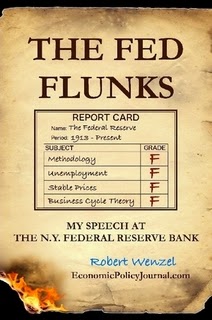
Robert Wenzel is Editor & Publisher of EconomicPolicyJournal.com and author of The Fed Flunks: My Speech at the New York Federal Reserve Bank.
Buy "The Fed Flunks" Now:
The Canadian dollar breaks above parity and, lo and behold, last Thursday, a Goldman managing director, Mark Carney is named governor of the Bank of Canada.
Mario Draghi, governor of the Bank of Italy, is also a former Goldman managing director.
Then, of course, there is U.S. Treasury Secretary, Hank Paulson, who was Chairman and Chief Executive Officer of Goldman.
Goldman did have a man at the Bank of England, but their presence there has gone astray for the time being. Goldman man David Walton was on the Bank of England's Monetary Policy Committee from July 2005 until June 2006 when he died at the age of 43 from necrotizing fasciitis, i.e., flesh eating bacteria.
Unimpeded here by flesh eating bacteria, Goldman's presence in United States government financial power circles remains very strong. Prior to Paulson, during Bill Clinton's second administration, Robert Rubin served as Treasury Secretary. Rubin was Vice Chairman and Co-Chief Operating Officer at Goldman from 1987 to 1990. From the end of 1990 to 1992, Rubin served as Co-Chairman and Co-Senior Partner at Goldman. And, Robert Zoellick, new head of the World Bank after Paul Wolfowitz was booted, was a managing director and chairman of the Goldman's International Advisors department.
How do they use these positions? Who knows all the details? But, at a regularly scheduled Fed monetary policy meeting on August 7, the Fed failed to cut interest rates. Records, obtained through a Freedom of Information Act request by Kenneth H. Thomas, a lecturer at the University of Pennsylvania's Wharton School, show that the next day Rubin called Fed chairman Bernanke. Bernanke cut the discount rate 10 days later. Rubin says he called Bernanke to tell him he was doing a good job.
With the sub-prime crisis making markets extremely volatile, it was a difficult period for most investment banking firms, but not for Goldman.
On September 20, Goldman reported much better than expected 3rd quarter results. Analyst Glenn Schorr at UBS AG writes the earnings demonstrate Goldman's "ability to not only navigate choppy waters, but make a ton of money doing so." Better at navigating choppy waters? Do you think your local investment club would show a better performance if your club members managed to get positions running the U.S.Treasury, the central bank of Canada, the central bank of Italy and the World Bank? And if this isn't enough, wouldn't it be great to get Ben Bernanke to take your call in the middle of the sub-prime crisis?
So what are the Goldman boys up to now? Columnist and political insider, Robert Novak is reporting that the Goldman boys are getting ready for Hillary to move into the White House. Despite Treasury Secretary Paulson working for a Republican Administration, Novak reports:
Eyebrows at the Treasury were raised last Tuesday when Secretary Henry M. Paulson Jr. named a major Democratic fundraiser to an important advisory role. The next day, eyebrows were still elevated when Undersecretary Robert K. Steel participated in an event spearheaded by Bill Clinton's two Treasury secretaries.
Oh yeah, Steel also happens to be a retired Goldman Sachs vice chairman who worked at the firm with Rubin and Paulson.
Here's more from Novak, obviously scratching his head at Paulson's moves:
A longtime Republican officeholder now in the Bush administration noted these developments and e-mailed a fellow Republican outside the government: "This leads some to wonder whether this Treasury has become the pre-placed Hillary Clinton team." ...the former Goldman Sachs chief executive does not act or sound much like a conservative Republican to the GOP remnant at the Treasury. "It's not in Hank Paulson's DNA," one official told me. Is he loyal to Bush? "Hank is for Hank," the official replied.
UPDATE 7-2-08: Hillary Clinton is slipping in the polls, will this be a problem for Goldman? What do you think? Here's an update on Goldman Sachs and their latest power move, the infiltration of the Barack Obama campaign.
The infiltration is led, of course, by Robert Rubin, former Co-Chairman of Goldman Sachs, and who is now advising Obama.
Further, Obama has named Jason Furman, his top economic adviser. Furman was an aide in the Clinton White House, and worked there directly under Rubin. He is also a close associate of Rubin through their work together on the Hamilton Project.
Which doesn't mean that current Goldman employees aren't paying attention to Obama. David Brooks of NYT reports that:
When you break it out by individual companies, you find that employees of Goldman Sachs gave more to Obama than workers of any other employer...Over the past few years, people from Goldman Sachs have assumed control over large parts of the federal government. Over the next few they might just take over the whole darn thing.
UPDATE 7-21-08 Goldman's most senior financial-institutions banker, Ken Wilson, is temporarily leaving the firm to advise Treasury Secretary Henry Paulson on how to resolve the country's banking crisis...Also, I just became aware this weekend via an NYT profile of CNBC's Erin Burnett that she worked for Goldman for a year.
UPDATE 9-22-08 Goldman is going to become a bank holding company and former Goldman CEO Paulson is about to become an American oligarch. Details here.
UPDATE 10-2008 Goldman Sachs becomes bank holding company on September 21. On October 6, Treasury Secretary and former Goldman head signs tax rule changes giving huge tax benefits to bank holding companies.
UPDATE 10-2008-Neel Kashkari named Treasury Interim Assistant Secretary for Financial Stability is a former Goldman Sachs man.
UPDATE 12-04-2008-Word has leaked that Gerald Corriagan, the former head of the Federal Reserve Bank of New York, is being tapped by Goldman Sachs as chairman of its newly created bank holding company.
UPDATE 1-18-2009 President-elect Barack Obama announces that his choice the head the CFTC is former Goldman exec. Gary Gensler.
---
Robert Wenzel is Editor & Publisher of EconomicPolicyJournal.com and author of The Fed Flunks: My Speech at the New York Federal Reserve Bank.
Buy "The Fed Flunks" Now:
Saturday, May 5, 2007
Gordon Gekko Is Back
Rupert Murdoch's 20th Century Fox plans to prodouce a sequel to the movie "Wall Street".
According to the New York Times, "Edward R. Pressman, who produced the original movie...reached an agreement with Fox this week to develop a sequel in which Mr. Douglas will resume his machinations on a global scale in the hedge-fund era. Mr. Pressman declined to say more about the plot. But the title, he said, will be Money Never Sleeps, after one of Gekko’s guiding principles in the first film, written by Stanley Weiser and Mr. Stone."
According to the New York Times, "Edward R. Pressman, who produced the original movie...reached an agreement with Fox this week to develop a sequel in which Mr. Douglas will resume his machinations on a global scale in the hedge-fund era. Mr. Pressman declined to say more about the plot. But the title, he said, will be Money Never Sleeps, after one of Gekko’s guiding principles in the first film, written by Stanley Weiser and Mr. Stone."
Thursday, April 26, 2007
G100: The Ultimate Insider Group
You just never know who you are going to run into at the Milken Institute Global Conference.
We had a good conversation with Daniel Casse there. Casse is president of G100.
Talk about under the radar, prior to meeting Casse we had never heard of the G100, and except for its web site, a google search of G100 brings up zero information on the group.
But, the group is probably the most powerful, most exclusive, regularly-meeting group in the world. The Council on Foreign Relations, the Trilateral Commission? Forget about it. These groups are too big and unwieldy. The G100 is where you want to be, and if you aren't one of a very select few, this post is about as much as you will ever know about them.
According to Casse and its web site, the G100 is a private group of chairmen and chief executive officers of the world’s most significant companies. Capped at 100, membership is by invitation only. Among all the CEO organizations, the G100 is unique. Established in 2000, the group meets twice a year at the Pratt Mansion in New York City for a Thursday night dinner, followed by a half day of "robust, off-the-record discussion" on Friday. Jack Welch regularly chairs the sessions, which he has called “the best meeting out there for CEOs.”
Casse told us, the press is not allowed at meetings. The assistants and aides of the CEO's are not allowed. It is just the CEO's. No one records anything. "The CEO's can let their hair down," he told us.
Casse said the meetings are fascinating and gave us an example of how Chuck Prince, the Chairman and Chief Executive Officer of Citi (formerly CitiGroup) came in and gave a detailed explanation of how he dealt with Citi's regulatory crisis in Japan when in September 2004, Japan's Financial Services Agency (FSA) , the banking and financial services regulatory body of Japan, announced that it had revoked the licenses of the four Citigroup offices in Japan.
Aside from the CEO's, only "top representatives" of certain advisory firms are allowed to come in and make presentations. They include Accenture, Deloitte, Evercore Partners, McKinsey & Co., Merrill Lynch, PricewaterhouseCoopers, Six Sigma Academy ,Skadden, Arps, Slate, Meagher & Flom, Spencer Stuart, The Parthenon Group and Vedder Price.
We had a good conversation with Daniel Casse there. Casse is president of G100.
Talk about under the radar, prior to meeting Casse we had never heard of the G100, and except for its web site, a google search of G100 brings up zero information on the group.
But, the group is probably the most powerful, most exclusive, regularly-meeting group in the world. The Council on Foreign Relations, the Trilateral Commission? Forget about it. These groups are too big and unwieldy. The G100 is where you want to be, and if you aren't one of a very select few, this post is about as much as you will ever know about them.
According to Casse and its web site, the G100 is a private group of chairmen and chief executive officers of the world’s most significant companies. Capped at 100, membership is by invitation only. Among all the CEO organizations, the G100 is unique. Established in 2000, the group meets twice a year at the Pratt Mansion in New York City for a Thursday night dinner, followed by a half day of "robust, off-the-record discussion" on Friday. Jack Welch regularly chairs the sessions, which he has called “the best meeting out there for CEOs.”
Casse told us, the press is not allowed at meetings. The assistants and aides of the CEO's are not allowed. It is just the CEO's. No one records anything. "The CEO's can let their hair down," he told us.
Casse said the meetings are fascinating and gave us an example of how Chuck Prince, the Chairman and Chief Executive Officer of Citi (formerly CitiGroup) came in and gave a detailed explanation of how he dealt with Citi's regulatory crisis in Japan when in September 2004, Japan's Financial Services Agency (FSA) , the banking and financial services regulatory body of Japan, announced that it had revoked the licenses of the four Citigroup offices in Japan.
Aside from the CEO's, only "top representatives" of certain advisory firms are allowed to come in and make presentations. They include Accenture, Deloitte, Evercore Partners, McKinsey & Co., Merrill Lynch, PricewaterhouseCoopers, Six Sigma Academy ,Skadden, Arps, Slate, Meagher & Flom, Spencer Stuart, The Parthenon Group and Vedder Price.
Wednesday, April 25, 2007
'Father' of Securitized Mortgage Market: First Time in History Median Home Price is Likely to Decline
Lewis Ranieri, generally regarded as the "father" of the securitized mortgage market, told an audience at the Milken Institute Global Conference that, in 2007, for the first time in history the median home price in the United States is likely to decline.
He also added that there will be many technical problems in working out problem mortgages, He said the vast majority of problem loans are securitized and that, in the past, problem loans were in individual portfolios. This time around, because of securitization, there are many, many holders of the securities with an interest in a mortgage. This will mean there will be many more parties that will have to agree to everything. In addition, he added, there are more lawyers and accountants in the picture to complicate matters.
He used as an example from the past: when he restructured mortgages with homeowners, he would never send out a 1099 tax form. In current situations, he said, lawyers and accountants want him to send out 1099 tax forms to homeowners who have restructured their mortgages. He asked rhetorically, "You have just restructured a mortgage for people who haven't been able to make their former payments and now you want to send them a tax bill for restructuring?"
He further stated there will be a "political reaction" and he feared that bad legislation could create problems for the entire mortgage sector that are now just limited to the sub-prime area. He fears, for example, that any legislation creating a moratorium on foreclosures would have a chilling effect on the issuance of home mortgages throughout the industry.
He also added that there will be many technical problems in working out problem mortgages, He said the vast majority of problem loans are securitized and that, in the past, problem loans were in individual portfolios. This time around, because of securitization, there are many, many holders of the securities with an interest in a mortgage. This will mean there will be many more parties that will have to agree to everything. In addition, he added, there are more lawyers and accountants in the picture to complicate matters.
He used as an example from the past: when he restructured mortgages with homeowners, he would never send out a 1099 tax form. In current situations, he said, lawyers and accountants want him to send out 1099 tax forms to homeowners who have restructured their mortgages. He asked rhetorically, "You have just restructured a mortgage for people who haven't been able to make their former payments and now you want to send them a tax bill for restructuring?"
He further stated there will be a "political reaction" and he feared that bad legislation could create problems for the entire mortgage sector that are now just limited to the sub-prime area. He fears, for example, that any legislation creating a moratorium on foreclosures would have a chilling effect on the issuance of home mortgages throughout the industry.
Carlyle Group Insider Sees Giuliani as Potential "Protector in Chief"
The ultimate insider, David Rubenstein, Managing Director and co-Founder of The Carlyle Group, told the Milken Institute Global Conference that a terrorist attack before the elections would have a dramatic impact on the elections and that it would result in Rudy Giuliani winning the election.
He told the conference that following another attack Giuliani would be viewed by voters as the "Protector in Chief".
At the conference, both Forbes Magazine president Steve Forbes and billionaire oil trader, Boone Pickens, strongly endorsed Giuliani.
He told the conference that following another attack Giuliani would be viewed by voters as the "Protector in Chief".
At the conference, both Forbes Magazine president Steve Forbes and billionaire oil trader, Boone Pickens, strongly endorsed Giuliani.
Tuesday, April 24, 2007
World Bank to Wolfowitz Lawyer: Save It
A special committee looking into whether World Bank President Paul Wolfowitz breached rules by approving a promotion for his girlfriend has declined to meet with his lawyer.
"I have heard indirectly they will not meet with me..." the lawyer, Robert Bennett, told Reuters.
"I have heard indirectly they will not meet with me..." the lawyer, Robert Bennett, told Reuters.
Sunday, April 22, 2007
42 Former World Bankers Call for Wolfowitz to Resign
Pressure on Paul Wolfowitz to resign continues to escalate. On Monday 42 of the World Bank's senior former executives called on him to step down in an open letter published in the FT. “There is only one way for Mr Wolfowitz to further the mission of the bank: he must resign,” the letter said.
Below is the entire text of the letter:
To the Editor of the Financial Times,
For the good of the World Bank, Paul Wolfowitz should resign
Sir,
We are a group of ex-World Bank Group staff who occupied senior positions in the institution (MDs, Senior VPs, VPs, Directors), and write in our personal capacities. Some of us have worked under Paul Wolfowitz, some of us have not, but all of us are watching with great concern the ongoing events at the Bank because of their impact on development and the interests of the poor. At a time when fighting poverty remains crucial in building a more hopeful, more balanced, and more secure world, the World Bank must remain credible if it is to speak with the moral authority necessary to move the poverty agenda forward.
For the Bank to succeed, it must be effective, especially on matters of good governance which Mr. Wolfowitz rightly emphasized as crucial to poverty reduction. What staff objected to was not the principle -- which they applauded. Rather it was that the policy was implemented with no consultation, and little transparency or apparent consistency. Now, as a result of a process of broad consultation that he was forced to undertake by the Board, Mr. Wolfowitz has been able to forge a consensus on how to raise the bar on corruption in a practical way. It is this that can serve as a lasting legacy at the Bank.
Mr. Wolfowitz says he believes in the mission of the Bank and wishes to continue. We believe that he can no longer be an effective leader. He has lost the trust and respect of Bank staff at all levels, provoked a rift among senior managers, developed tense relations with the Board, damaged his own credibility on good governance –his flagship issue, and alienated some key shareholders at a time when their support is essential for a successful replenishment of the resources needed to help the poorest countries, especially in Africa.
We have taken note of the fact that the ministers who met last weekend in Washington took the unusual step of expressing publicly their great concern about the situation in the Bank. And staff and some of our senior colleagues within the Bank have advised Mr. Wolfowitz that the best course of action for the future of the Bank would be for him to step down. This painful, unprecedented action was not a rash conclusion. We support it and salute the courage of our colleagues. Like them, we believe this is a regrettable but essential step to prevent the Bank’s effectiveness as a development institution, and its credibility as the international community’s trustee of resources for fighting poverty, from being fatally compromised. There is only one way for Mr. Wolfowitz to further the mission of the Bank: he should resign.
Gautam Kaji, former Managing Director
Peter Woicke, former Managing Director and EVP
Shengman Zhang, former Managing Director
Roberto Danino, former senior VP and general counsel
Gary Perlin, former Senior VP and CFO
Jean-Louis Sarbib, former senior VP
Shahid Javed Burki, former VP
Cesare Calari, former VP
David de Ferranti, former VP
Ian Goldin, former VP
Ian Johnson, former VP
Geoffrey Lamb, former VP
Johannes Linn, former VP
Callisto Madavo, former VP
Gobind Nankani, former VP
Christiaan Poortman, former VP
Jean-François Rischard, former VP
Jo Ritzen, former VP
Richard Stern, former VP
John Wilton, former VP
Michael Barth, former Director
Amar Bhattacharya, former Senior Adviser
Gerard Caprio, former Director
Michael Carter, former Director
Dennis de Tray, former Director
Paula Donovan, former Director
Marisa Fernandez-Palacios, former Director
Charles Griffin, former Director
Jean-Philippe Halphen, former Director
Ann Hamilton, former Director
Paul Isenman, former Director
Homi Kharas, former Regional chief economist
Harinder Kohli, former Director
Olivier Lafourcade, former Director
Philippe Liétard, former Director
Serge Michailof, former Direector
Bernard Pasquier, former Director
Manuel Penalver Quesada, former Director
Enrique Rueda-Sabater, former Director
Alexander Shakow, former Director
Karl Voltaire, former Director
Below is the entire text of the letter:
To the Editor of the Financial Times,
For the good of the World Bank, Paul Wolfowitz should resign
Sir,
We are a group of ex-World Bank Group staff who occupied senior positions in the institution (MDs, Senior VPs, VPs, Directors), and write in our personal capacities. Some of us have worked under Paul Wolfowitz, some of us have not, but all of us are watching with great concern the ongoing events at the Bank because of their impact on development and the interests of the poor. At a time when fighting poverty remains crucial in building a more hopeful, more balanced, and more secure world, the World Bank must remain credible if it is to speak with the moral authority necessary to move the poverty agenda forward.
For the Bank to succeed, it must be effective, especially on matters of good governance which Mr. Wolfowitz rightly emphasized as crucial to poverty reduction. What staff objected to was not the principle -- which they applauded. Rather it was that the policy was implemented with no consultation, and little transparency or apparent consistency. Now, as a result of a process of broad consultation that he was forced to undertake by the Board, Mr. Wolfowitz has been able to forge a consensus on how to raise the bar on corruption in a practical way. It is this that can serve as a lasting legacy at the Bank.
Mr. Wolfowitz says he believes in the mission of the Bank and wishes to continue. We believe that he can no longer be an effective leader. He has lost the trust and respect of Bank staff at all levels, provoked a rift among senior managers, developed tense relations with the Board, damaged his own credibility on good governance –his flagship issue, and alienated some key shareholders at a time when their support is essential for a successful replenishment of the resources needed to help the poorest countries, especially in Africa.
We have taken note of the fact that the ministers who met last weekend in Washington took the unusual step of expressing publicly their great concern about the situation in the Bank. And staff and some of our senior colleagues within the Bank have advised Mr. Wolfowitz that the best course of action for the future of the Bank would be for him to step down. This painful, unprecedented action was not a rash conclusion. We support it and salute the courage of our colleagues. Like them, we believe this is a regrettable but essential step to prevent the Bank’s effectiveness as a development institution, and its credibility as the international community’s trustee of resources for fighting poverty, from being fatally compromised. There is only one way for Mr. Wolfowitz to further the mission of the Bank: he should resign.
Gautam Kaji, former Managing Director
Peter Woicke, former Managing Director and EVP
Shengman Zhang, former Managing Director
Roberto Danino, former senior VP and general counsel
Gary Perlin, former Senior VP and CFO
Jean-Louis Sarbib, former senior VP
Shahid Javed Burki, former VP
Cesare Calari, former VP
David de Ferranti, former VP
Ian Goldin, former VP
Ian Johnson, former VP
Geoffrey Lamb, former VP
Johannes Linn, former VP
Callisto Madavo, former VP
Gobind Nankani, former VP
Christiaan Poortman, former VP
Jean-François Rischard, former VP
Jo Ritzen, former VP
Richard Stern, former VP
John Wilton, former VP
Michael Barth, former Director
Amar Bhattacharya, former Senior Adviser
Gerard Caprio, former Director
Michael Carter, former Director
Dennis de Tray, former Director
Paula Donovan, former Director
Marisa Fernandez-Palacios, former Director
Charles Griffin, former Director
Jean-Philippe Halphen, former Director
Ann Hamilton, former Director
Paul Isenman, former Director
Homi Kharas, former Regional chief economist
Harinder Kohli, former Director
Olivier Lafourcade, former Director
Philippe Liétard, former Director
Serge Michailof, former Direector
Bernard Pasquier, former Director
Manuel Penalver Quesada, former Director
Enrique Rueda-Sabater, former Director
Alexander Shakow, former Director
Karl Voltaire, former Director
Saturday, April 21, 2007
Blumenthal Unloads on Wolfowitz
Sidney Blumenthal has the latest episode in the Riza-Wolfowitz Affair, which results in Blumenthal calling for even more investigations. This time with national security clearance questions:
...Wolfowitz's World Bank scandal over his girlfriend reveals many of the same qualities that created the wreckage he left in his wake in Iraq: grandiosity, cronyism, self-dealing and lying -- followed by an energetic campaign to deflect accountability. As with the war, he has retreated behind his fervent profession of good intentions to excuse himself. The ginning up of the conservative propaganda mill that once disseminated Wolfowitz's disinformation on WMD to defend him as the innocent victim of a political smear only underlines his tried-and-true methods of operation. The hollowness of his defense echoes in the thunderous absurdity of Monday's Wall Street Journal editorial: "Paul Wolfowitz, meet the Duke lacrosse team." ...
The World Bank continued to pay ...[Riza's] salary, which was raised by $60,000 to $193,590 annually, more than the $183,500 paid to Secretary of State Condoleezza Rice, and all of it tax-free. Moreover, Wolfowitz got the State Department to agree that the ratings of her performance would automatically be "outstanding." ..
[At her new job at the ]State Department officials familiar with the details of this matter confirmed to me that Shaha Ali Riza was detailed to the State Department and had unescorted access while working for Elizabeth Cheney. Access to the building requires a national security clearance or permanent escort by a person with such a clearance. But the State Department has no record of having issued a national security clearance to Riza...
...officials stress that the department would never issue a clearance to a non-U.S. citizen as part of a contractual requisition. Issuing a national security clearance to a foreign national under instructions from a Pentagon official would constitute a violation of the executive orders governing clearances, they say.
Given these circumstances, the inspector general of the Defense Department should be ordered to investigate how Shaha Ali Riza was issued a Pentagon security clearance. And the inspector general of the State Department should investigate who ordered Riza's building pass and whether there was a Pentagon credentials transmittal letter.
...Wolfowitz's World Bank scandal over his girlfriend reveals many of the same qualities that created the wreckage he left in his wake in Iraq: grandiosity, cronyism, self-dealing and lying -- followed by an energetic campaign to deflect accountability. As with the war, he has retreated behind his fervent profession of good intentions to excuse himself. The ginning up of the conservative propaganda mill that once disseminated Wolfowitz's disinformation on WMD to defend him as the innocent victim of a political smear only underlines his tried-and-true methods of operation. The hollowness of his defense echoes in the thunderous absurdity of Monday's Wall Street Journal editorial: "Paul Wolfowitz, meet the Duke lacrosse team." ...
The World Bank continued to pay ...[Riza's] salary, which was raised by $60,000 to $193,590 annually, more than the $183,500 paid to Secretary of State Condoleezza Rice, and all of it tax-free. Moreover, Wolfowitz got the State Department to agree that the ratings of her performance would automatically be "outstanding." ..
[At her new job at the ]State Department officials familiar with the details of this matter confirmed to me that Shaha Ali Riza was detailed to the State Department and had unescorted access while working for Elizabeth Cheney. Access to the building requires a national security clearance or permanent escort by a person with such a clearance. But the State Department has no record of having issued a national security clearance to Riza...
...officials stress that the department would never issue a clearance to a non-U.S. citizen as part of a contractual requisition. Issuing a national security clearance to a foreign national under instructions from a Pentagon official would constitute a violation of the executive orders governing clearances, they say.
Given these circumstances, the inspector general of the Defense Department should be ordered to investigate how Shaha Ali Riza was issued a Pentagon security clearance. And the inspector general of the State Department should investigate who ordered Riza's building pass and whether there was a Pentagon credentials transmittal letter.
Subscribe to:
Posts (Atom)